
How Electrical Boards Are Customized For Specific Applications
How Electrical Boards Are Customized
An electrical board is an essential component in many electronic devices. It acts as a guide for electricity and signals to follow, and allows the device to function on a very basic level. However, a circuit board is much more than just that. It can do many more things, and can be customized for specific applications. It is because of this versatility that circuit boards are so important in our everyday lives. From printers to elevators, almost all electronics use circuit boards in some way or another.
A electrical boards, or PCB, is a flat sheet of insulating material with a layer of copper laminated to it. It has a pattern of conducting lines called tracks or circuit traces that function like wires fixed in place, along with pads for connections and vias to pass connections between layers of copper. The conductive surface may have a coating to protect the copper from corrosion and reduce solder shorts between traces, or undesired contact with bare copper. The substrate may also have a dielectric that provides a particular insulating value, such as polytetrafluoroethylene (Teflon), FR-2, FR-4, CEM-1, or CEM-3.
Once the schematic has been designed, the circuit layout is created using CAD tools to create the logical representation of the circuitry. It is then checked and verified to ensure that it will work correctly. This includes checking for proper power and voltage ratings for components, as well as ensuring that all connections between components will fit within the board’s physical constraints. The board’s layout is then sent to manufacturing, which produces the files that are used to build the circuit board.
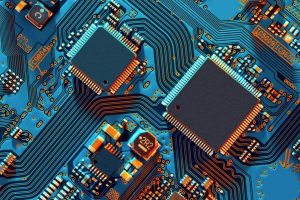
How Electrical Boards Are Customized For Specific Applications
Several important aspects of a PCB are determined during the design process, including the temperature range that it can operate in, and the electrical properties of the substrate and its constituent materials. Components that aren’t rated to handle the appropriate power levels or voltages may overheat, and can even cause the entire circuit board to fail.
The type of components also has a significant impact on the size and cost of the final circuit board. For example, smaller components can be more compact and easier to work with, but they can also have lower power ratings or be more expensive. Another factor that is considered when designing a circuit board is the manufacturability and quality of the finished product. This is achieved by designing the component placement and trace routing to optimize manufacturability, such as by minimizing trace lengths or routing differential pairs around power pins. It is also done by laying out components to minimize interference between different parts of the circuit, and by using blind or buried vias where needed. This is especially useful for fine-pitch packages, which are very difficult to escape through conventional copper traces.

India’s smartphone shipments grew by 25 per cent YoY in Q4 2023, led by Xiaomi, Vivo

Doctor’s ‘Indians take Dolo 650 like it’s Cadbury Gems’ post goes viral. How this can be harmful – Firstpost

How your doctor stays fit, calm and resilient beyond the hospital walls – Firstpost
About The Author
