
How Do Flexible Printed Circuit Manufacturers Test Their Products?
Flexible Printed Circuit Manufacturers Test Their Products
The conductive traces on flexible printed circuit boards (PCBs) differ from standard PCBs in that they are thin and have the capacity to bend. They also have the ability to accept a wide variety of surface-mounted components and plated through-hole devices. The difference in materials used, design standards and manufacturing methods, and functionality make flex circuits distinct from standard PCBs.
To accommodate their bending capabilities, a flexible printed circuit manufacturers must have an adequate thickness. Its material must be able to withstand high temperatures and resist damage caused by constant flexing. This requirement makes it important for a manufacturer to ensure that their products meet certain specifications before offering them for sale.
During the fabrication process, manufacturers must determine the optimal thickness for their products. Depending on the application, this may require an extensive testing and quality assurance process. For example, a PCB meant for aerospace or space applications must meet more rigorous quality standards than those designed for consumer electronics.
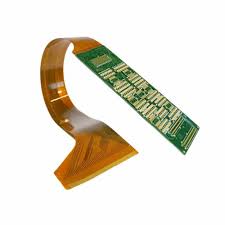
How Do Flexible Printed Circuit Manufacturers Test Their Products?
The thickness of a flexible circuit is determined by the number of layers. As a general rule, more layers mean higher density and more complexity, which increases the cost of the product. However, there are exceptions to this rule. A manufacturer should consider all factors, including the price of raw materials and manufacturing costs, before deciding on the right thickness for a particular product.
Flexible printed circuits consist of a plastic substrate, such as polyimide or polyester film, with copper circuits laminated on one or both sides. They are used in electronic devices, like cameras and mobile phones, as well as industrial equipment, such as monitors and printers. In addition to their bending capabilities, they are also used as interconnects between rigid circuit boards and other components.
A key benefit of flexible circuits is their flexibility, which allows them to fit into unconventional shapes and spaces. This feature can be a drawback, though, as it can create stress points on the board, potentially damaging its structural integrity and making it unsuitable for use. To prevent these stresses, manufacturers should take into account the bending radius of the product at an early stage of the design process.
For medical devices, it is even more important to choose a flexible PCB material that can meet specific requirements, such as biocompatibility and sterilization compatibility. These requirements often necessitate the use of a special resin, such as FR4. The dielectric constant of a flexible PCB is another important factor to consider.
In order to guarantee that the product meets its specifications, flexible circuit manufacturers must perform a series of tests. These tests include quality assurance tests and a bend test. They must also make sure that the board is free from defects. These tests can be performed using a fixtureless in-circuit test (FICT), which eliminates the need for custom fixtures and reduces the cost of testing. The FICT method is fast and accurate, making it an attractive option for many manufacturers. The final step is lamination, which seals the PCB and protects it from contaminants. Before lamination, the PCB must be cleaned and stacked in the correct order.

Apple is seriously considering foldable tablets, but will launch OLED iPads, MacBooks first

All about U-WIN, India’s new online vaccine portal for pregnant women, children – Firstpost

Are Swiss chocolates safe for consumption? – Firstpost
About The Author
