
Can a Printed Circuit Board Prototype Be Reused?
Printed Circuit Board Prototype
A printed circuit board (PCB) prototype is a test version of the final PCB design that allows engineers to review and approve the physical aspects of the product. Unlike a full production run, which is expensive and time-consuming to make changes to, a PCB prototype can be quickly modified to reflect any required changes. This reduces rework costs and eliminates the need to create new boards.
Prototypes are used for many purposes, from determining whether a component is suitable for the final design to conducting environmental and compliance testing. The quick turnaround of printed circuit board prototype also makes them ideal for use in prototype testing, allowing teams to identify and fix problems early in the manufacturing process to avoid costly delays and rework.
The different types of prototyping boards can all be reused to varying degrees. The most common type of protoboard is a breadboard, which has spring-loaded sockets to allow for easy component insertion and removal. However, this type of protoboard can only be used with through-hole components; surface-mounted ones require a more sophisticated PCB design.
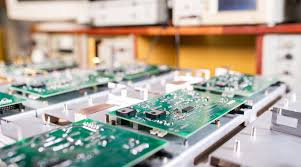
Can a Printed Circuit Board Prototype Be Reused?
Another popular type of protoboard is a stripboard. These feature perforations on both sides of the board with copper strips running along the bottom, which serve as connections. If these connections are not needed, the strips can be broken by using a drill to remove them from the board. Stripboards can be bought cheaply and are very versatile, allowing for more circuits to be built with the same number of holes.
Both breadboards and stripboards can be used to assemble one-off circuits. However, more advanced prototypes such as the functional prototype are intended to replicate the primary functions of the final product and demonstrate its viability. These prototypes are expensive to build, but they do provide a clearer idea of what the final product will look like and how it will work.
A common misconception is that a PCB prototype can be used as the final product. However, the components on prototypes often have unique metal properties that can cause issues with production equipment or other devices. Additionally, these components are not usually reused or salvaged, leading to excessive e-waste.
In addition to the cost savings, reusing prototypes can help teams avoid errors during assembly. This is especially true with complex prototypes, which can contain multiple layers and components. To prevent these mistakes, engineers should follow proper assembly procedures. This includes ensuring that the correct soldering temperature is set and cleaning all components and parts to ensure good adhesion.
Ultimately, the decision to reuse a prototype will depend on the value of the finished product and the availability of the necessary components. While the majority of components can be removed and reused, certain parts are difficult to separate, causing significant damage during the de-soldering process. This is especially true for components with gold plating. While researchers in China have developed a method of recycling these components, it is not yet available for commercial application.

WhatsApp banned over 7 crore Indian accounts in 2023, 71 lakhs in November itself

Narcotics police forces go online as Drug Cartels turn to video games for mules, members and customers

How cancer takes over your brain and steals motivation – Firstpost
About The Author
